.png)
Zanotta products, and upholstered furniture in particular, have always stood out for their high level of comfort and their strong commitment to sustainable performance. Sustainability is at the heart of the company’s philosophy, which invests in cutting-edge technologies and innovative materials with the aim of minimizing environmental impact. Among the innovations that most tangibly express Zanotta’s responsible approach is the introduction – a pioneering move in the furniture industry – of removable covers for upholstered furniture. A forward-thinking design choice that has helped reduce waste and extend product lifecycles. The possibility of removing and replacing the upholstery, which can be washable depending on the type of fabric, not only allows the look of a piece of furniture to be renewed, but also makes it easier to care for and maintain it thoughtfully over time.
Three designs embody this approach, combining innovative technologies, responsible material choices and an aesthetic conceived to stand the test of time: Fedrigo, a 2025 new entry designed by Vincent Van Duysen; William+, a reinterpretation of one of Zanotta’s bestsellers designed by Damian Williamson; and finally Za:Za Max by Zaven, the evolution of the Za:Za sofa, winner of the Compasso d’Oro in 2024.
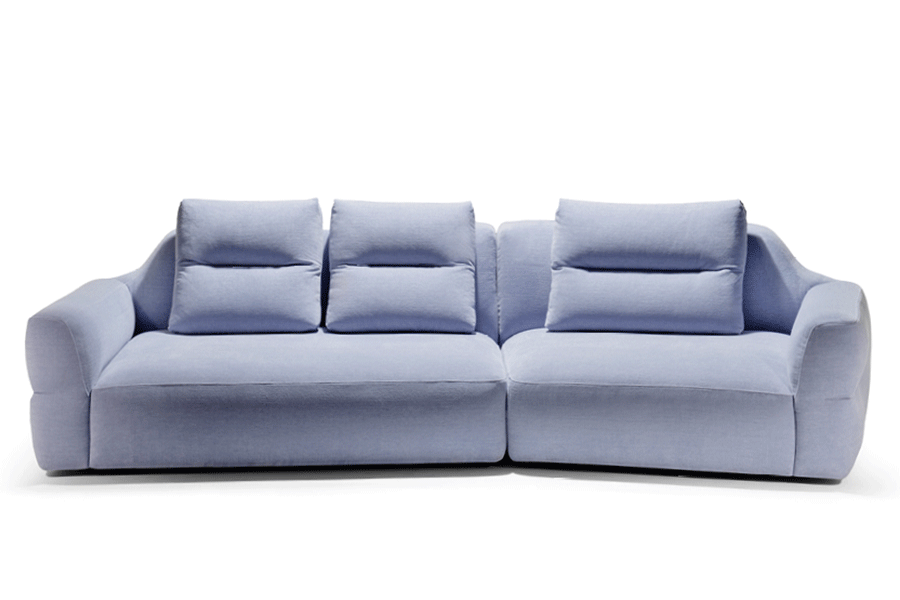
Fedrigo, the result of a new collaboration between the brand and Belgian designer Vincent Van Duysen, is a modular system conceived to offer the highest levels of comfort, sustainability and durability. Its generous proportions and enveloping design – in which the backrest and armrests merge into one fluid gesture – are combined with a structure developed in full compliance with regulations on disassembly and the use of sustainable materials. The sofa’s supporting structure is made of plywood and incorporates a shaped element in Circullarrefoam® polyurethane, containing a percentage of recycled polyols. These polyols are reintegrated into the formulation used to produce the foam block, which is subsequently shaped. The foam structure, combined with the plywood, is wrapped in a cover made of recycled PET fibre, secured with polyester Velcro.
The final upholstery, divided for practical purposes into seat and backrest/armrest sections, is also attached with Velcro. The adhesive-free assembly of the components allows the product to be completely disassembled at the end of its life, making it possible to recycle or recover the individual components.
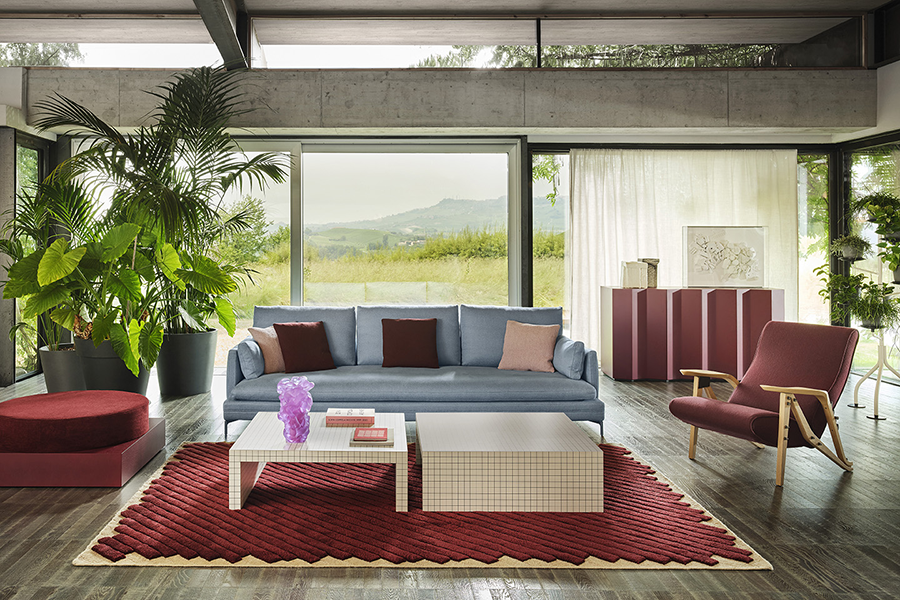
This balance between aesthetics and functionality is also reflected in William+, the evolution of the iconic William sofa designed by Damian Williamson in 2010.
This new, deeper and even more comfortable version retains the strength of the original model’s refined, essential aesthetic, while introducing technical and sustainability improvements that enhance its performance without compromising its original spirit. The steel frame is combined with a seat cushion made of differentiated-density polyurethane foam and thermally bonded polyester fibre, while the backrest and armrests are made of self-extinguishing foamed polyurethane with inserts in thermally bonded polyester fibre. The seat and back cushions are made of recycled PET fibre with differentiated-density polyurethane inserts, providing calibrated and long-lasting support. William+ is fully removable-cover and is available in fabric or leather, while the feet are offered in polished aluminium alloy, satin-finished nickel or black-painted finishes.
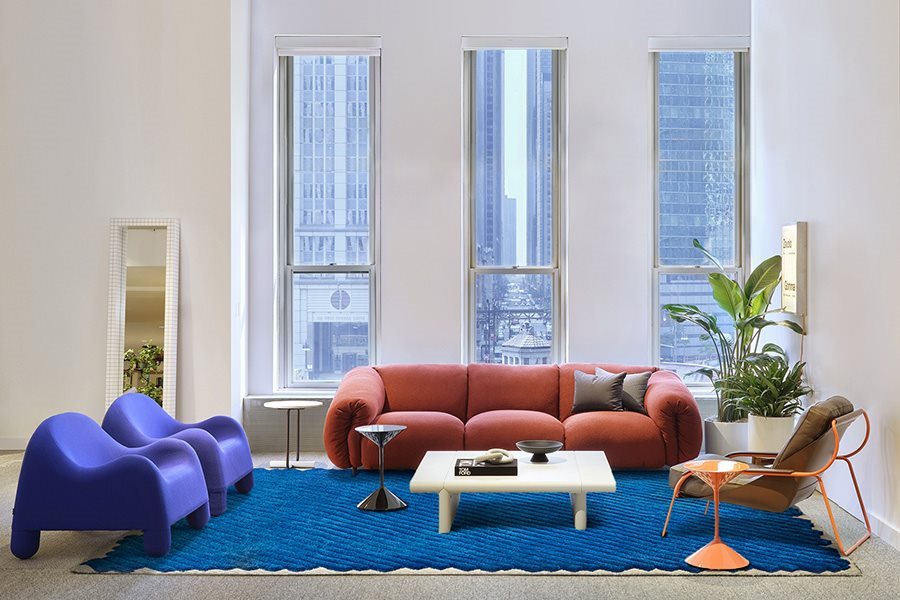
Finally, Za:Za Max, designed by Zaven, was conceived with the aim of radically rethinking the sustainability of upholstered furniture, placing recyclability and the easy disassembly of every component at the heart of the project. The painted steel supporting structure – available in talc, hemp, orange, amaranth, grass green, espresso or black – is fitted with rigid anthracite polyester straps, creating a welcoming base for the cushions. The upholstery, made with a non-removable inner cover in regenerated and regenerable polyester, provides enveloping, well-balanced comfort thanks to its dual-density composition: polyurethane in the lower or rear section of the cushion, and regenerated and regenerable polyester microspheres in the upper or front section. The microspheres and the cover come from a recycled-material supply chain using PET derived from recovered bottles. Each upholstered component of Za:Za Max – seat, backrest and armrests – is placed in separate pockets and assembled without adhesives, ensuring material separability and facilitating recovery at the end of the product’s life. The fabric upholstery is fully removable, with each element secured to the structure by a series of snap fasteners.
This year, the collection has been expanded with the introduction of two new ottomans, measuring 95 × 75 × 44 cm and 95 × 95 × 44 cm respectively, joining the double-seat ottoman already included in the catalogue (150 × 75 × 44 cm). Designed to complement the Za:Za Max system, the new elements share the same aesthetic and construction features, offering an additional solution focused on comfort and sustainability.
Zanotta continues to reaffirm its commitment to a conscious approach to design, in which technical innovation, sustainability and comfort come together in furniture solutions conceived to stand the test of time. A forward-looking vision that embraces the future without compromising the quality and beauty that have always distinguished the brand.
Photo credits: Luca Caizzi
Iscriviti alla Newsletter
Be the first to be informed about the latest news, upcoming events and new products by Zanotta.